When you turn over a Michael Kors bag to read the inner label, the mention of the country of manufacture often comes as a surprise. Far from the New York image associated with the brand, the reality of production takes place across several continents. Understanding where Michael Kors bags are actually made helps to better assess what you are buying, and at what price.
Capri Holdings and the industrial logic behind Michael Kors
Michael Kors is no longer an independent house. The brand belongs to Capri Holdings, a group that also owns Versace and Jimmy Choo. This group structure directly influences manufacturing choices.
A publicly traded group optimizes its production costs on a global scale. Each product range (bags, shoes, ready-to-wear) can be entrusted to different factories depending on their specialty, labor costs, and proximity to raw materials.
To know precisely where Michael Kors bags are made, it is necessary to distinguish between product lines. A high-end leather bag does not come from the same factory as a coated canvas tote sold in an outlet. This distinction is key to understanding price and finish discrepancies.
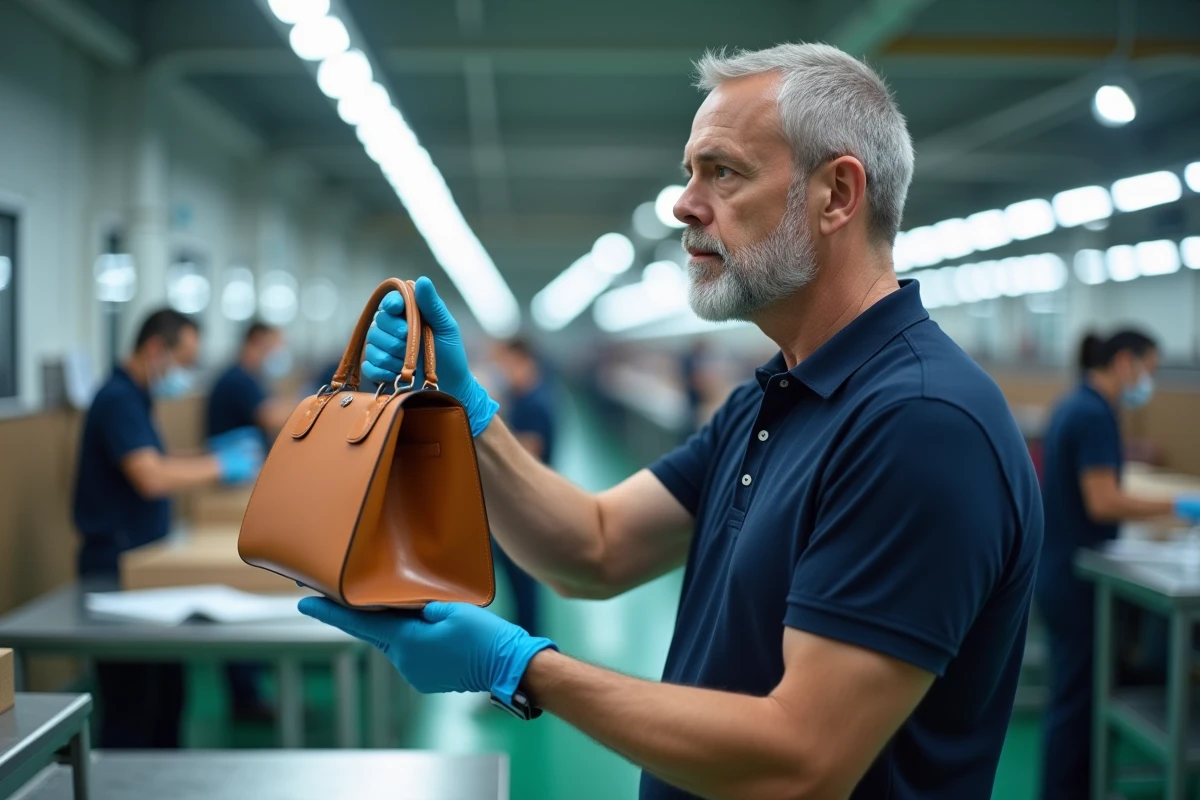
Countries of manufacture for Michael Kors bags: China, Vietnam, Italy
The majority of Michael Kors bags are made in China, in provinces specialized in leather goods. This is the case for most of the collections sold in boutiques and major fashion retailers.
China, the heart of current production
Chinese factories assemble the largest portion of bags sold worldwide. They handle high volumes with short manufacturing lead times. The mention “Made in China” on a Michael Kors bag is the most common, and it does not mean that the product is of poor quality. Quality control depends on the specifications set by the brand, not just the country alone.
Vietnam and India, growing alternatives
Capri Holdings is diversifying its production to Vietnam and India. This strategy aims to reduce dependence on a single supplier country, especially in light of trade tensions and fluctuations in tariffs.
Vietnam already manufactures a significant share of accessories and small leather goods. India is gaining strength in certain textile and leather ranges. Other countries like Sri Lanka, Thailand, Turkey, and Indonesia also participate in the production chain depending on the product categories.
Italy, reserved for premium lines
Bags labeled “Made in Italy” exist at Michael Kors, but they pertain to the highest-end collections. Italian manufacturing remains a luxury positioning argument, not a standard applied to the entire brand. These pieces use selected leathers and artisanal finishes that justify a significantly higher price.
What the “Made in…” label says (and does not say) about quality
Have you ever noticed that two Michael Kors bags at the same price can have labels from different countries? That’s normal. The country of manufacture indicates where the final assembly took place. It does not provide information about the origin of the leather, the source of the fasteners, or the place of dyeing.
A bag assembled in China may contain leather tanned in Italy and metal accessories made in Korea. The country label reflects only one step of the production chain, never its entirety.
- The leather can come from Italy, India, or South America depending on the range and season.
- Metal parts (fasteners, buckles, logos) are often produced in specialized workshops in Asia, then plated or treated locally.
- The inner lining, sewing threads, and glues sometimes come from third-party suppliers unrelated to the assembly country.
For the consumer, this reality means that a “Made in China” label does not equate to a low-quality product, and a “Made in Italy” label does not guarantee that every component is Italian.
Tariffs and reshoring: what is changing for Michael Kors
The increases in tariffs applied to imports from China are prompting fashion groups to rethink their logistics strategy. Capri Holdings is not exempt from this trend.
Diversification towards Southeast Asia primarily addresses a financial issue, not a quality approach. Producing in Vietnam or India allows for circumventing certain tariffs while maintaining competitive manufacturing costs.
This reorganization also has concrete effects on lead times. Chinese factories exporting to the United States are facing extended delivery times, which pushes brands to build inventories in other Asian countries.
Check the country of manufacture before buying
Why does this detail matter? Because depending on the line (main collection, outlet, capsule line), the assembly country and thus the finishes vary. Two seemingly similar Michael Kors bags may show perceptible quality differences in touch and wear.
- Turn the bag over and read the sewn inner label, not the cardboard hang tag.
- Compare the finishes of the seams and leather edges between an outlet model and a boutique model.
- In the second-hand market, the absence of a country label or a worn serial number should raise alarms about a potential counterfeit risk.
The manufacturing of Michael Kors bags reflects the trade-offs of the entire accessible luxury industry: globalized production, cost optimization, and premium lines reserved for European workshops. Understanding these mechanisms allows for a more informed purchase, knowing exactly what you are paying for and why.