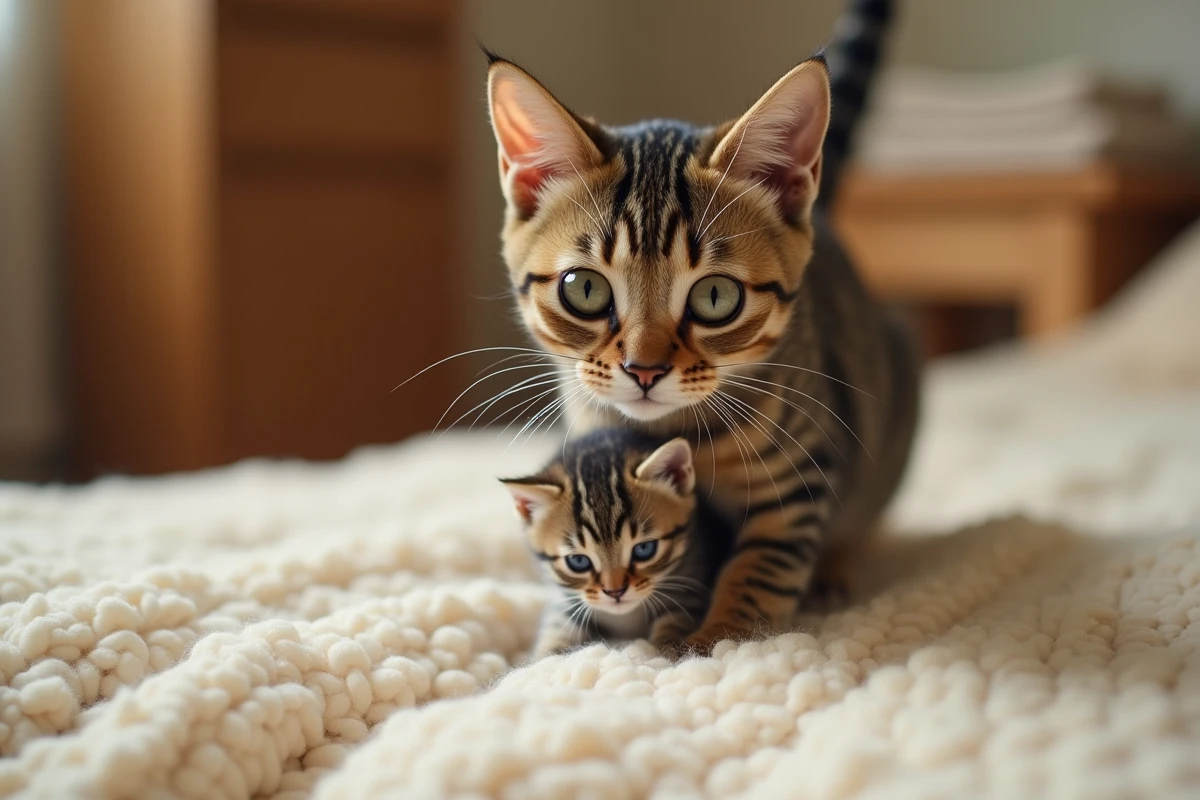
After giving birth, it sometimes happens that a cat picks up her kittens one by one by the scruff of their neck to transport them elsewhere. This behavior often surprises owners, who worry about rejection or health issues. However, the mother’s movement of the kittens responds to specific biological logics, some of which go beyond the simple search for tranquility.
Nest odors and neonatal infectious risk in kittens
Most forums explain the movement as a need for calm. This is an incomplete interpretation. Behavioral veterinarians point to a lesser-known factor: the mother’s olfactory perception in relation to infectious risk.
During the first weeks of life, the kittens’ immune systems remain immature. The risk of neonatal septicemia is particularly high at this time. When the cat detects an unusual smell in the nest (household product, litter too close, marked human odor after repeated handling), she interprets this olfactory overload as a health threat to the litter.
Understanding why my cat moves her kittens involves this perspective: the mother is not just looking for a quieter place; she is trying to reduce her kittens’ exposure to what she perceives as a contaminated environment.
This reflex explains why some cats move their litter after a simple cleaning of the nest with a scented detergent, or after a visitor has touched the kittens. The odor perceived by the mother triggers the movement, not the noise or light in the majority of cases observed in domestic settings.
Postpartum pain and disorganized movement of the litter
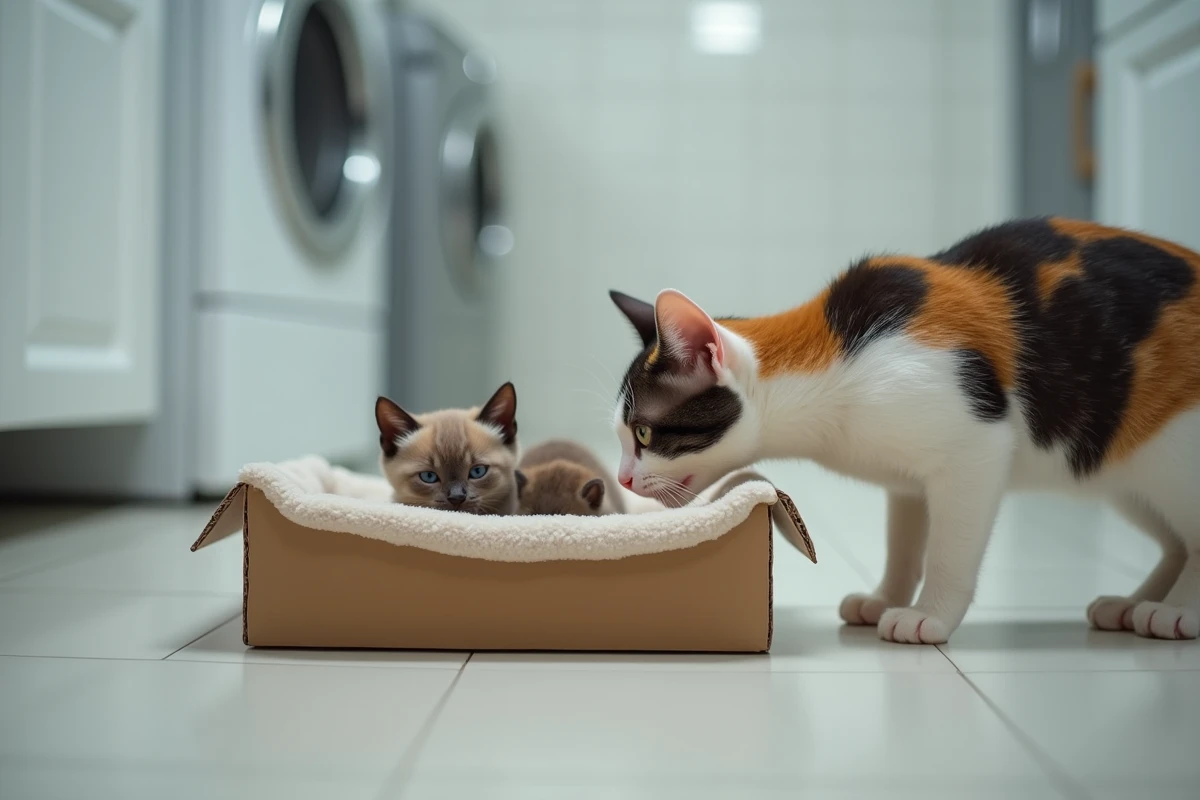
Not all movements indicate healthy maternal behavior. When a cat changes nests several times in a few days, transports her kittens to unsuitable places (litter box, bathtub, high shelf), or seems agitated during transport, the possibility of physical pain should be considered.
A difficult birth can leave residual pain. Mastitis (infection of the mammary glands) or metritis (uterine infection) causes discomfort that drives the mother to move, seeking a less painful position, and to carry her little ones along in this movement.
A repeated and disorganized movement may signal physical suffering in the cat rather than a simple protective instinct. Signs to watch for include:
- The mother moves the kittens more than two or three times in less than 48 hours, without stabilizing in a new nest
- She abandons one or more kittens along the way, suggesting exhaustion or pain preventing her from completing the transport
- Her nipples are red, warm, or swollen, or she refuses to let the kittens nurse
- She exhibits abnormal vaginal discharge (color, odor) several days after giving birth
In the presence of these combined signs, a quick veterinary consultation is necessary. The movement is then just a symptom, not the cause of the problem.
Ambient temperature and thermal regulation of the nest
Kittens do not regulate their body temperature autonomously during their first weeks. The mother adjusts the location of the nest to keep her little ones in a thermal comfort zone.
Recent veterinary studies highlight that cats seek a stable and moderate temperature zone, neither too hot nor too cold. A nest placed near a radiator in winter can become excessively hot. Conversely, a draft or an unheated tiled floor prompts the mother to look for a more sheltered location.
This thermal factor is often underestimated by owners who focus on the calmness and darkness of the place. A quiet but cold room will be abandoned in favor of a less tranquil but better-tempered closet. The cat prioritizes the thermal survival of the litter over acoustic comfort.
Environmental stress and the cat’s tolerance threshold after birth
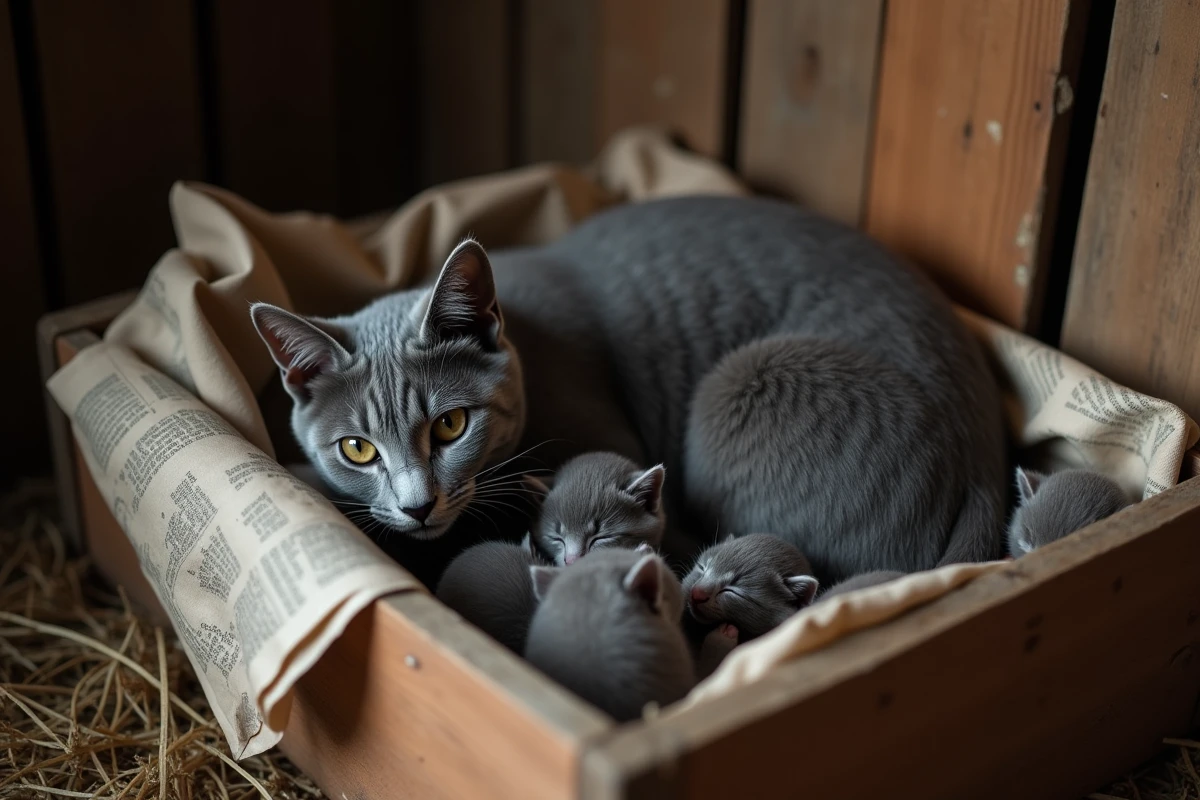
Postpartum stress in cats is not an abstract concept. The presence of other animals in the home, repeated visits from family members around the nest, or a change in household routine (renovations, moving, arrival of a new animal) lowers the mother’s tolerance threshold.
A cat that previously tolerated cohabitation with a dog perfectly may suddenly view its presence as a direct threat. The stress tolerance threshold drops significantly after birth. What posed no problem before becomes a reason for movement.
The appropriate response is to limit interactions with the litter during the first weeks. Reducing handling of the kittens to what is strictly necessary (weight checks, quick health inspections) decreases the likelihood that the mother will decide to change nests.
What to avoid concretely
- Do not clean the nest with scented products: a damp cloth without detergent is sufficient
- Do not invite visitors to see the kittens during the first two weeks
- Do not relocate the nest to another part of the house, even if the location chosen by the mother seems inconvenient
- Do not force the mother to stay in a confined space if she shows signs of agitation
When the cat chooses a location that poses no immediate danger to the kittens (no height, no risk of falling, no access to the outside), it is best to respect her choice. Placing the kittens back in the original nest after a move often triggers another transport, sometimes to an even less suitable location. The mother will eventually stabilize if the environment she has chosen remains calm, clean, and at the correct temperature.