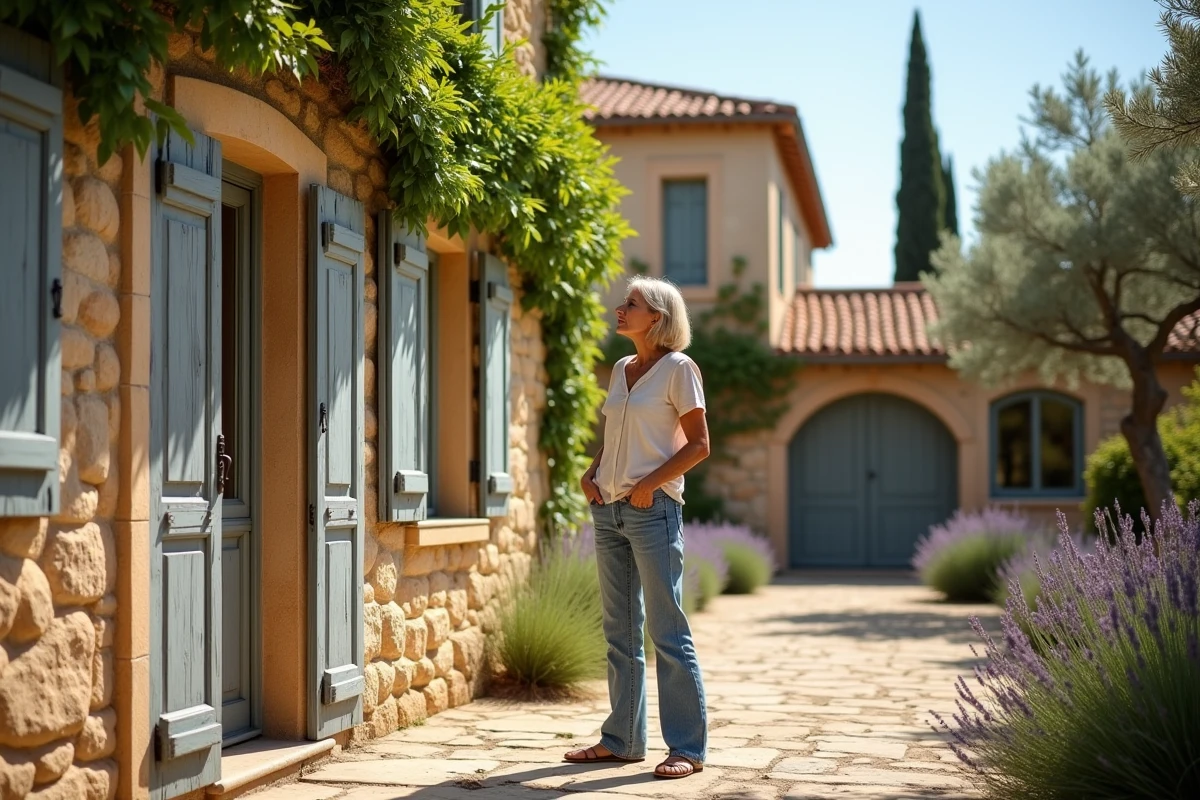
The mas de Jeanne, a recurring set in Demain nous appartient for several seasons, is not a studio construction placed in a field. It is an operational oyster farm located on the northern shore of the Thau lagoon, between Sète and Marseillan. Fans have cross-referenced screenshots from the series with Google Street View images to locate the building, and the match is unambiguous: piers, oyster tables, light orientation on the lagoon.
Oyster farm of the Thau lagoon: a hybrid set between real exteriors and studio
The production of DNA has been using a two-part setup for this set since 2023. The wide outdoor shots, those that show the piers, oyster parks, and the surface of the lagoon, are filmed at the real mas. The interiors (kitchen, living room), on the other hand, are recreated on a set remodeled in the Sète studios.
This choice responds to concrete constraints. Wind, changing light, and the noise from shellfish farming activities make outdoor sound recording difficult to use for long dialogue scenes. The set allows these sequences to be filmed under controlled conditions while maintaining visual coherence thanks to the work of the production designer.
Nicolas Brossette, the production designer of the series, detailed this process in a feature from the Midi Libre magazine supplement dedicated to filming in Sète. We observe that the mas de Jeanne in Demain nous appartient relies on this real exterior / studio interior articulation, a common technique in daily soap operas but rarely documented with such precision for DNA.
Access to the filming mas in Sète: why visits are prohibited
The mas used for outdoor shots is not open to the public. Since 2022, the municipality of Sète and the production have established a protocol that prohibits organizing fan visits. The reason lies in the very nature of the place: it is an active oyster farming operation, not a tourist set.
The oyster tables visible on screen are professional installations. The influx of visitors to the piers would pose a safety risk and disrupt the work of the oyster farmers. The production has also taken care never to communicate the exact address of the mas.
For fans who wish to approach the set, the most realistic solution remains to walk along the northern shore of the Thau lagoon towards Marseillan. Several viewpoints allow glimpses of the mas’s silhouette from the road or coastal paths, without encroaching on the property.
Difference between the mas de Jeanne and other outdoor sets of DNA in Sète
The mas de Jeanne stands out from other outdoor filming locations in the series due to its status as a privately operated site. Most of the iconic sets of DNA are public or semi-public spaces that are easily identifiable.
- The beach of Trois Digues, between Sète and Marseillan-Plage, serves as the backdrop for the Spoon beach bar. It is freely accessible all year round.
- The quai d’Orient houses the building used as a courthouse in the series. It is the regional office of Crédit Maritime Mutuel, visible from the public road.
- The facades of houses in the Quartier Haut serve for several characters. They are only used for exterior illustration shots.
- The Spoon bar, in its outdoor version, is filmed at a real establishment on the Sète seafront.
In all these cases, the interiors are recreated in the studio. The mas de Jeanne follows the same logic, but with an additional constraint: the prohibition of access to the real site distances this set from the “series tourism” dynamic that works for other locations.
DNA filming studios in Sète: the complement to the real set
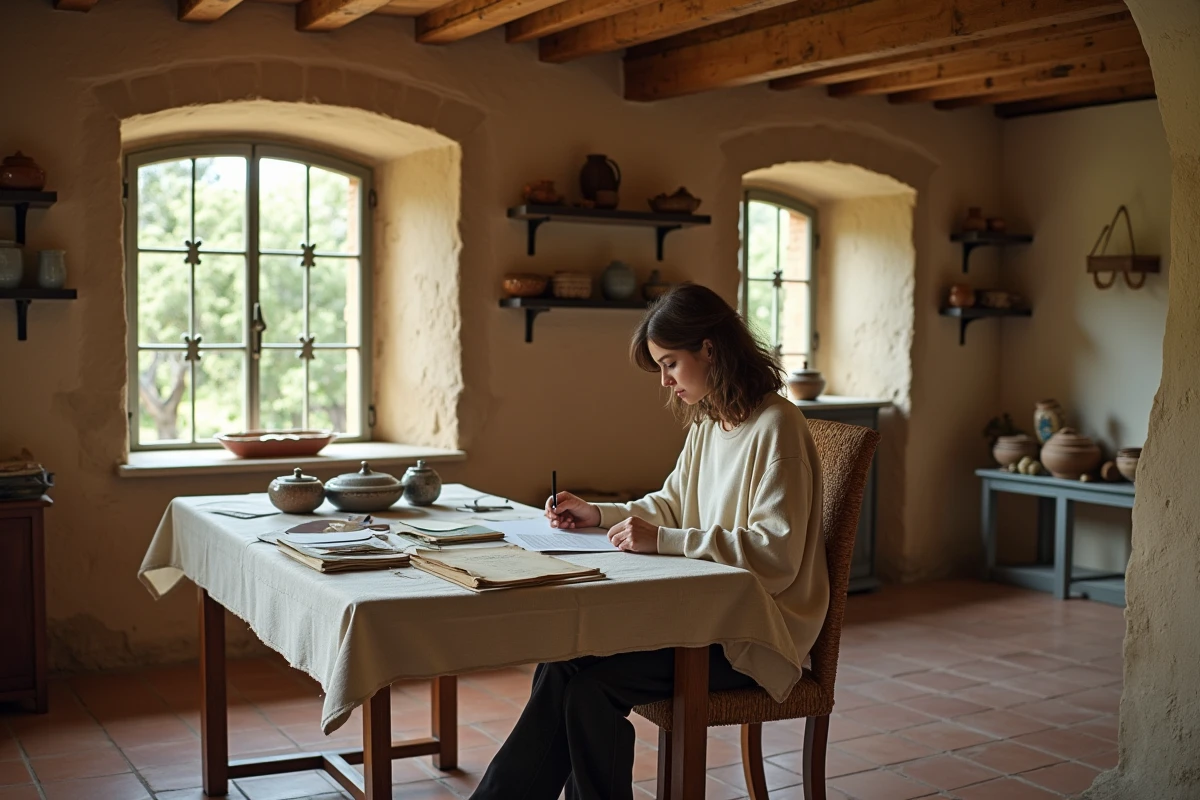
The studios where the interior scenes of the mas are filmed occupy part of the total area dedicated to the series in Sète. The production has set up more than fifteen permanent sets for all the storylines. The set of the mas de Jeanne replicates the volumes and materials visible in the outdoor shots: exposed stones, beams, and Languedoc-style woodwork.
The connection between real exterior and studio interior relies on a visual continuity effort. The props (nets, crates, oyster farming tools) present on the set correspond to those filmed on the Thau lagoon site. This concern for coherence explains why the majority of viewers do not perceive the transition between the two filming spaces.
Locating the mas de Jeanne on the Thau lagoon: geographical markers
The mas is located on the northern shore of the lagoon, in the area between the port of Sète and the entrance to Marseillan. This portion of the lagoon coastline has a high density of oyster farms, making identification from the road difficult.
The most reliable visual elements for spotting the correct building remain the image comparisons made by fan communities. The orientation of the piers and the angle of view on Mont Saint-Clair are the most distinguishing geographical clues. From the departmental road that runs along the lagoon, the mas is partially visible, but trees and nearby installations limit the direct view.
The northern shore of the Thau lagoon is worth a visit independently of the series. The lagoon landscapes, oyster parks, and the unique light of this Mediterranean basin offer a setting that the scenes of DNA faithfully reproduce, even if the television framing obscures the nearby industrial installations.