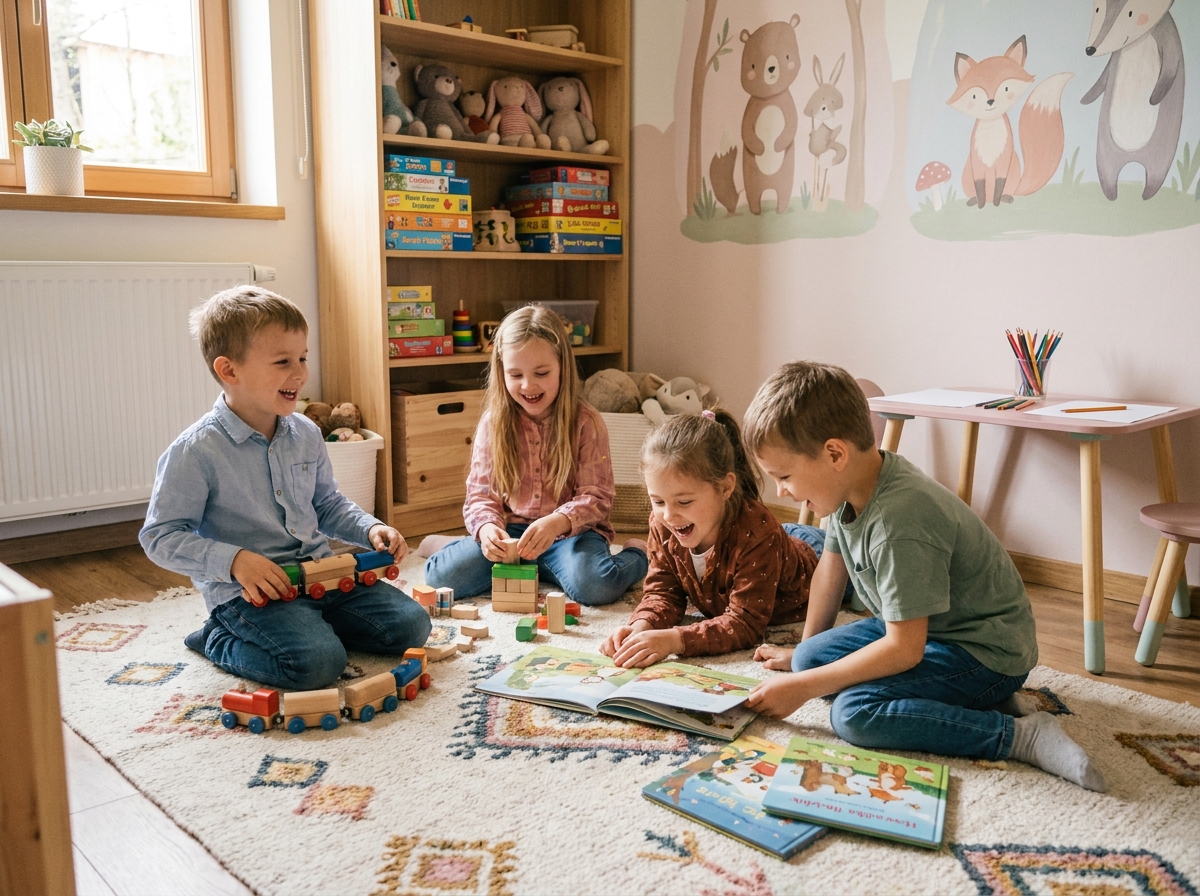
A space designed for children involves stricter safety constraints than any other room in the house. Furniture standards are constantly evolving, imposing requirements on the height of furniture, wall mounting, or the composition of materials. Optimization is never universal: each home configuration reveals different, often unexpected needs. Between play areas, suitable storage, and rest spaces, versatility becomes a necessity rather than just an asset.
Understanding the specific needs of children according to their age
A child’s needs evolve at lightning speed. A room designed for early childhood is nothing like the refuge of a teenager seeking privacy. For the youngest, there is zero compromise: furniture with rounded edges, natural materials, and nothing toxic nearby. The crib lays the foundation of the cocoon, and the evolving furniture anticipates the next stage. Some opt for a cabin bed or a model with drawers and integrated storage, which withstand the years without flinching or losing their appeal.
As the child gains autonomy, the layout follows suit. Storage within reach, low shelves, modular baskets: this is the age when one picks their toys alone, chooses their favorite colors, and where the desk is placed near a window. The room then becomes a space where choices matter, where the child begins to compose their own universe.
Then comes adolescence. The room takes on a new dimension, becoming a strategic retreat, customizable down to the smallest details. Sturdy furniture is needed, carefully chosen accessories, decor that reflects the personality of the one who inhabits the space. Entrusting the teenager with the layout or decor is, in fact, the best way to enhance their ownership and well-being.
There is a resource page that details step by step how to target the essentials according to age and available space: my child’s room.
The goal remains the same: to evolve the room at the child’s pace, to protect when necessary, to foster autonomy, and then to leave space for creativity, until the moment when intimacy becomes an obvious necessity.
How to reconcile play, rest, and storage in the same room?
Designing a child’s room is never purely black or white: sleeping, playing, storing, everything must coexist at the same time, sometimes within a few square meters. The key is to compose the room as a multifunctional space, where each zone finds its purpose.
The loft bed frees up valuable floor space, the cabin structure delineates a reading corner or a craft area. Placing a plush rug marks a zone dedicated to play. As for storage, everything must remain accessible: shelves suited to the child’s height, rolling bins, chests that disappear under the bed, or stacked baskets. It is by tidying up alone that the child takes ownership of their room, and order seems less out of reach.
To navigate all these possibilities, here are some concrete ideas for organizing each zone:
- Create a true relaxation corner: a comfortable armchair, thick cushions or a pouf, paired with a soft lamp for recharging.
- Select clever furniture: a storage bench, a mobile bedside table, transformable shelves that grow with the child.
- Let the child choose certain objects or accessories to bring a truly personal touch to the room.
Not to mention the daily constraints: radiators to navigate around, prioritizing natural light for the desk, and ensuring smooth circulation. The layout changes according to the uses and desires that evolve over the months. Observing, exchanging, and adjusting according to real needs: this is the essence of a modular room.
Creative tips for a room that is both playful and functional
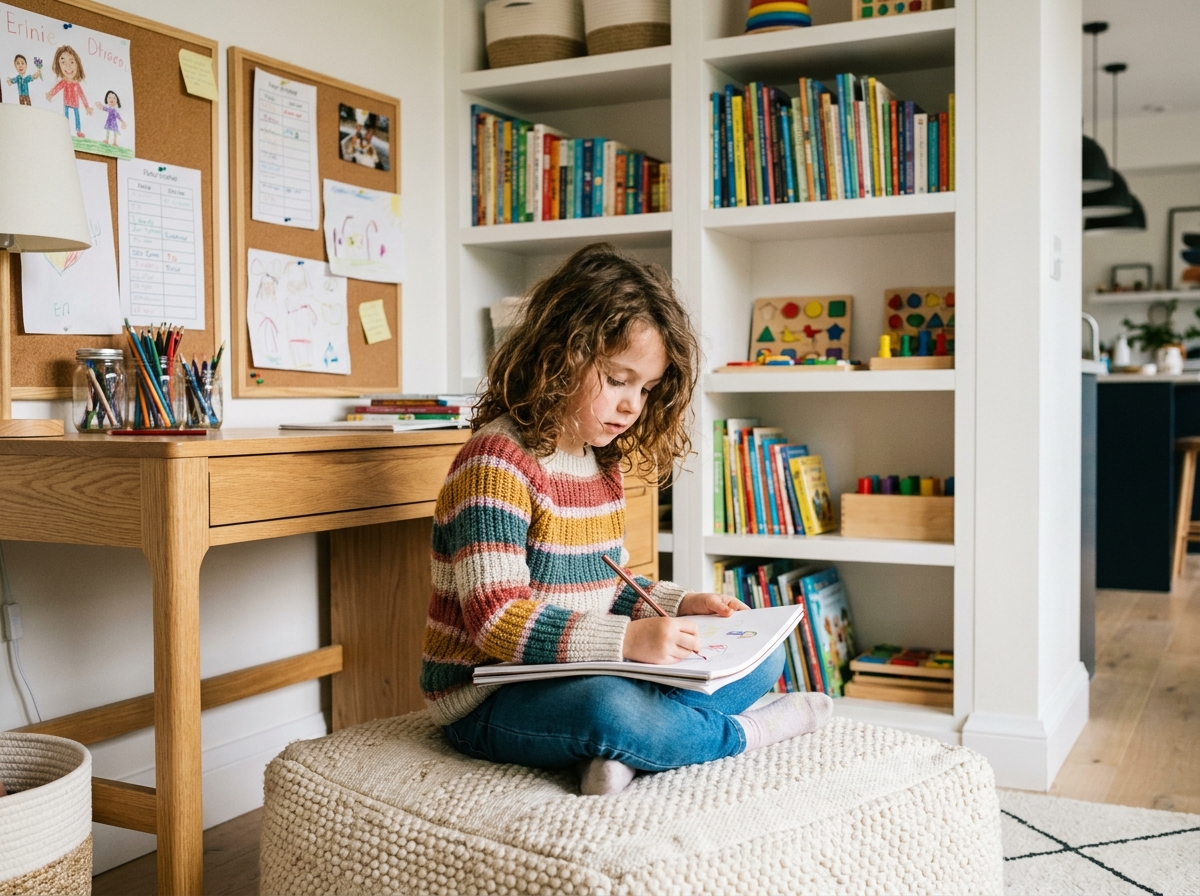
A child’s room is not a fixed decor. It is a true playground for the imagination and daily life. Opting for soft colors calms in the evening: light blue, soft green, beige, or sand create an enveloping atmosphere. To limit any undesirable exposure, eco-friendly paint without volatile compounds scores points. For the floor, it needs to be robust: warm parquet, soft carpet, or linoleum that can withstand anything, each has its advocates but all easily absorb the frantic races and evening constructions.
The touch that makes the difference is personalization. Wall stickers reinvent a partition, a string of lights slipped behind a curtain sets the evening mood, a removable panel separates reading and play. Multiplying light sources adapts the atmosphere: a soft night light, a directed desk lamp, a garland to soften the space, each moment finds its light.
To enhance well-being and reduce risks, a few tips are worth adopting from the start:
- Favor furniture without sharp edges, materials without questionable substances, and opt for certified solid wood.
- Install outlet covers, choose non-slip rugs to secure all activities.
- Involve the child in decorative choices, colors, patterns, themes, so they truly take ownership of their universe and feel good in it.
Every detail counts, from the thrifted chest to the hook chosen together. The support of a professional often refines the project, but it is in daily life, between parents and children, that the true success of the room unfolds. Ultimately, a successful room is one that you want to return to, where you feel free to dream and invent, day after day.