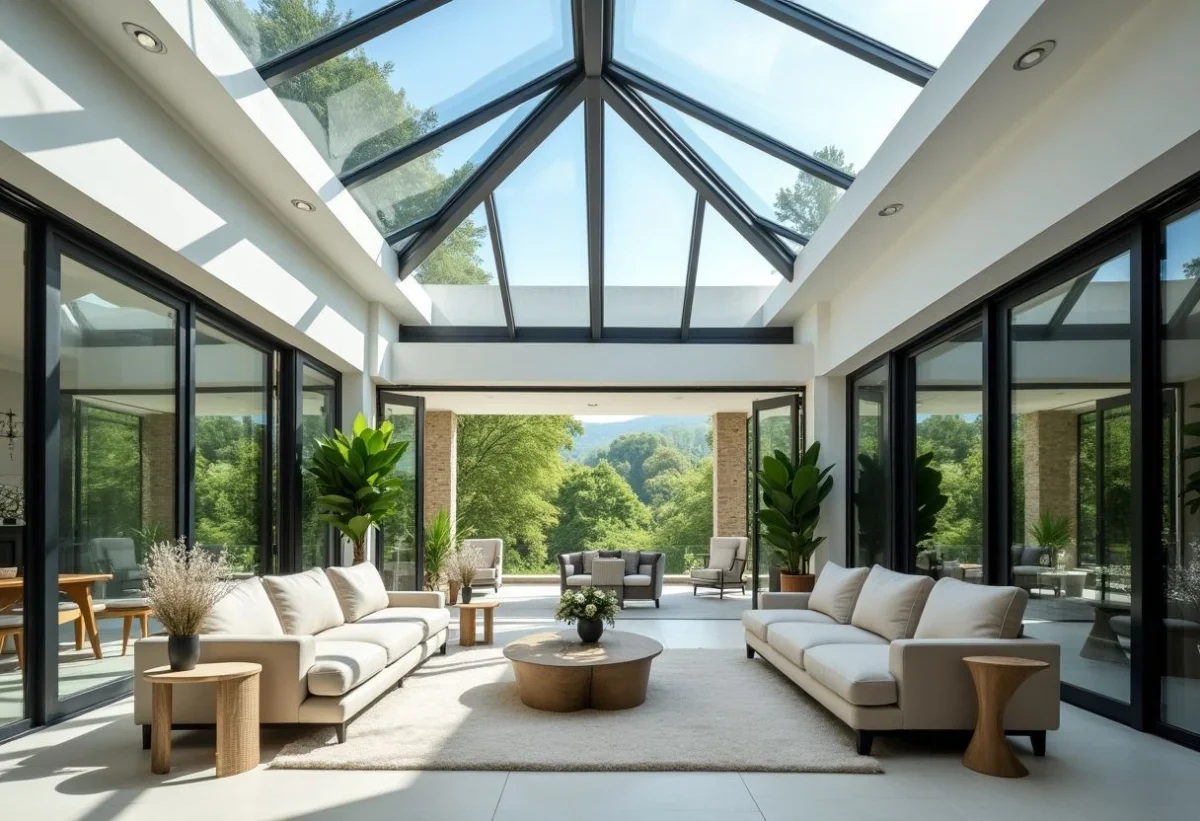
As an emblematic element of contemporary architecture, the glass partition has become a must-have in interior design today. Initially associated with artists’ studios and industrial lofts, this elegant structure has managed to conquer our living spaces, bringing brightness and character. A true symbol of the alliance between aesthetics and practicality, it asserts itself in both modern and traditional homes. The glass partition, by its mere presence, transforms a space, making it both functional and aesthetic while respecting the needs for light and openness. Let’s decode together this element that continues to seduce and inspire.
Origins and history of the glass partition
The glass partition, although very trendy today, draws its origins from previous centuries. Its popularity began to rise at the end of the 19th century, with the advent of the industrial era.
At that time, artists and craftsmen demanded workspaces bathed in natural light, conducive to creation. Glass partitions were then adopted in workshops, factories, and even in some greenhouses. Over time, they conquered private interiors, becoming a symbol of a certain art of living.
In the 1920s, the Art Deco movement gave them a new aesthetic dimension. Architects used glass partitions to create plays of light and to accentuate the verticality of structures. Today, their use has diversified, and they have become a standalone decorative element, appreciated for their ability to elegantly redefine spaces.
The advantages of an interior glass partition
Installing a glass partition in your interior offers a multitude of benefits, far exceeding purely aesthetic aspects.
- Natural light: A glass partition allows natural light to diffuse into rooms that would otherwise be dark and enclosed. This not only creates a warm atmosphere but also helps reduce energy consumption.
- Space delimitation: It offers a visual separation without enclosing spaces. This is particularly useful in small apartments where space optimization is essential.
- Style and customization: Glass partitions can be customized according to individual tastes and preferences. Whether it’s opaque glass, colored glass, or metal structures, they adapt to all interior styles.
The different types of glass partitions
There is a wide variety of glass partitions, each with its own characteristics and advantages. Here are some of the most common models.
The studio glass partition is undoubtedly the most popular. Inspired by the old artists’ studios, it is characterized by its fine metal structures and large glazed surfaces. This type of glass partition is ideal for adding an industrial touch to an interior.
Next, the kitchen glass partition, which often serves to separate the kitchen from the living room or dining room while maintaining a certain visual continuity. This allows for cooking while staying in touch with guests or family.
There is also the custom glass partition, which perfectly adapts to atypical spaces or the specific needs of homeowners. It offers total freedom in terms of design and materials used.
How to integrate a glass partition into your interior
To fully exploit the potential of a glass partition, several elements should be considered when integrating it into your living space.
- Choose the ideal location: Think about where the glass partition will have the most impact, both in terms of brightness and style. Living spaces, such as the living room or kitchen, are often favored.
- Consider the materials: The choice of materials is essential to ensure the durability and aesthetics of your glass partition. Steel, aluminum, and wood are all viable options, each bringing a unique charm.
- Respect the style of your interior: The glass partition should harmonize with your overall interior decoration. Whether your style is contemporary, classic, or industrial, ensure that the glass partition complements and enhances the aesthetics of your home.