
Paris has such a wealth of cultural venues, parks and shows that planning a family outing can feel overwhelming. Permanent collections at several city museums are free to visit, but temporary exhibitions often charge admission.
Admission to national museums is generally free for children under 18, regardless of nationality, while the rules for older visitors vary by institution. Before choosing an activity, it’s worth considering three factors: the children’s ages, your actual budget and any booking requirements.
Free museums in Paris: what “free admission” really means
The obvious way to keep costs down is to focus on free attractions. Free admission to the permanent collections at Paris city museums is a great option, but it doesn’t automatically include temporary exhibitions. If you’re planning to visit a major exhibition, check the venue’s page for specific ticket prices.
Another detail that often catches visitors out: free admission doesn’t always mean you can visit without a reservation. Some museums require a timed ticket even for free entry, while others don’t require advance booking. There’s no single rule that applies everywhere. The only reliable approach is to check the official website of the museum you plan to visit a few days before your outing.
For visitors over 18, free admission may depend on nationality or place of residence, depending on the institution. You may be asked to show ID or a student card at the entrance.
Families travelling with teenagers close to turning 18 should check the rules for each venue rather than relying on a general rule. Online resources such as https://www.mamanaparis.fr list family-friendly outings in Paris and regularly provide details about admission requirements.
Family outings in Paris by age: the factors that make all the difference
Ranking activities by popularity—the Eiffel Tower, the Louvre, a Seine cruise—says nothing about whether they’re right for a three-year-old or a 12-year-old. It’s better to choose based on practical criteria than on lists of “must-see” attractions.
Children under 6
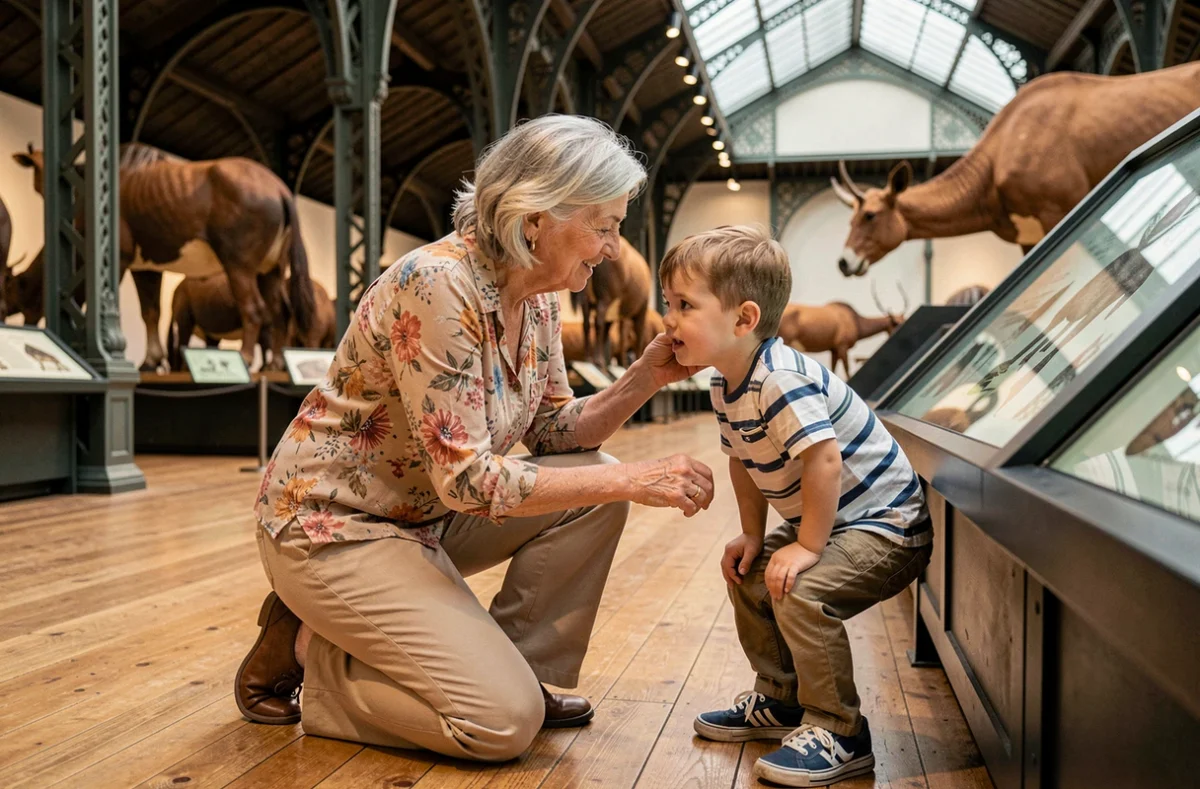
Attention span is the limiting factor. A museum visit lasting more than 45 minutes can quickly become a struggle. Parisian parks and gardens, such as the Jardin des Plantes and Jardin du Luxembourg, give children room to alternate between exploring and moving around. Short creative workshops offered by several museums are a better fit for this age group than a self-guided visit.
Local event calendars highlight festivals for young children, including participatory art events for ages 7–12 and treasure hunts included in the admission price at some venues. These short, interactive formats are better suited to younger children’s attention spans.
Children aged 6 to 12
This is the most versatile age group. There’s a wider range of options, from an introductory graffiti workshop to a visit to the Grande Galerie de l’Évolution or a circus show. The deciding factor is active participation. Children this age get more out of a hands-on workshop than a contemplative visit.
Immersive experiences, such as interactive museums and game-based trails, hold their attention for longer. Live performances, from circus to theatre for young audiences, are an especially effective alternative to screens at this age.
Teenagers
With teenagers, the challenge is less about logistics than motivation. Activities that give them some independence, such as escape rooms and semi-independent urban trails, tend to work better than traditional guided tours. A Seine cruise can be a hit if it’s part of a plan the teenager helped choose.
The real cost of a family outing in Paris: expenses that are easy to overlook
Admission to a museum or park is only a fraction of the total cost. Three expenses can quickly add up if you haven’t planned for them.
- Transport: metro fares for four people (two adults and two children over 4) add up quickly over a day with several journeys. Compare ticket books and day passes before you set off.
- Food: museum cafés and restaurants near tourist attractions tend to charge considerably more than the Parisian average. Packing a picnic to enjoy in a public garden can significantly reduce this expense.
- Extras after your visit: souvenir shops, coin-operated machines and snacks. These incidental expenses can cost more than admission itself. Set a small “treat” budget for each child before you go to avoid endless negotiations.
Families visiting Paris for several days can consider cultural passes that include admission to multiple museums and monuments. Whether they’re worth the price depends on how many places you actually visit: a pass can save money if you visit more than two or three sites, but may cost more than individual tickets if you visit fewer.
Reservations and crowds: the factor activity lists often overlook
Most online guides list activities without mentioning booking requirements. If you turn up at the ticket desk of a popular museum on a Saturday morning without a timed ticket, you could spend an hour in line—or even be turned away.
Online booking has become almost standard at Paris’s major attractions. Even when it isn’t required, it lets you choose a less busy time slot. Tuesday and Wednesday mornings are generally quieter than weekends.
Children’s shows, including circus and theatre for young audiences, often sell out several weeks in advance during school holidays and the Christmas season. Booking early doesn’t guarantee the best seats, but it does guarantee you’ll get seats.
The most effective approach is to check the City of Paris cultural calendars and the websites of the venues you’re interested in, rather than relying on fixed rankings. A successful family outing depends less on how prestigious the venue is than on whether the activity suits the children’s ages and the practical conditions on the day.